
Here are the Best Vedic mantra for good health, Slokas For Good Health, In current situation most the people are suffering many of disease because of there life style and working culture they always busy in schedule in working and more Vedic Mantra For Good Health.
mantra for good health We know that in Vedic era sadhus are not doing hard work always after that they are feel energetic and powerful body and healthy person you think why this happen and how they are always feeling energetic without of holding high wait equipment like 21st century people doing as a part of gym.
READ MORE- BEST KUBER MANTRA FOR BUSINESS
mantra for good health In Vedic era people are making their power by the chanting of mantras, and use of power of there mind this is the power full parts of human body, if you work in your mind or Brain, you are most powerful person in the world.
Vedic Mantras for Good Health & Immunity
Vedic Mantra For Good Health In 2026, as we continue to navigate a world shaped by global health challenges, the quest for robust immunity and overall well-being has never been more pressing. With emerging variants of viruses, environmental stressors, and the fast-paced demands of modern life, many are turning to ancient wisdom for support. Vedic mantras, rooted in the sacred texts of Hinduism like the Rigveda and Yajurveda, offer a timeless approach to health.
These powerful sound vibrations are believed to harmonize the body, mind, and spirit, boosting immunity by reducing stress, enhancing vitality, and promoting cellular healing. Unlike quick-fix supplements, chanting mantras is a holistic practice that integrates meditation, breathwork, and intention-setting.
Scientific studies in recent years, including those from institutions like the All-India Institute of Medical Sciences, have explored how mantra chanting influences the autonomic nervous system, lowering cortisol levels and improving immune response. Vedic Mantra For Good Health In fact, a 2025 review in the Journal of Alternative and Complementary Medicine highlighted how regular Vedic chanting can increase natural killer cell activity, crucial for fighting infections.
Here you have to pay attention the most that the mantras used in Vedic civilization were used keeping in mind the benefit of others along with one’s own, so you should always use these mantras for good deeds.
If you use them with belief, they can easily solve many problems in your life, but the most important thing is trust.
Secret Benefits Of Om Krishnaya Vasudevaya Mantra
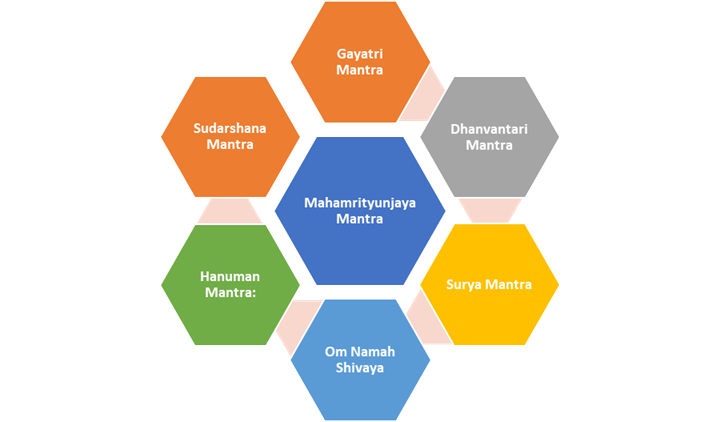
mantra for good health For daily health in 2026, incorporating these mantras into your routine perhaps during morning walks in Kolkata’s Maidan or evening wind-downs can be transformative. This article dives into the top 7 Vedic mantras for health and immunity, complete with pronunciation guides, benefits, and practical tips. Remember, while mantras complement medical advice, consult a healthcare professional for serious conditions. Let’s explore how these ancient chants can fortify your body against today’s challenges.
Top Vedic Mantras for Daily Health & Immunity in 2026
Vedic Mantra For Good Health, For any being whether human or even belonging to the animal kingdom—it is absolutely essential to gain knowledge about mantras. You will be astonished to discover the benefits of mantras, and your entire perspective on life will undergo a profound transformation; you will find yourself prepared to embrace a completely new way of living.
1. Mahamrityunjaya Mantra: The Great Death-Conquering Chant
This is the most powerful mantra in the Hinduism Faith if you chant this mantra in proper manner this will change your life if you chant daily 5 times 11 times 51 times 108 times one of the above counting your will see changes in your life.
- ॐ त्र्यम्बकं यजामहे सुगन्धिं पुष्टिवर्धनम्।
उर्वारुकमिव बन्धनान् मृत्योर्मुक्षीय मामृतात्॥
Vedic Mantra For Good Health, Most important things about your life the change and thinking power of mind are decide your life how perform in future where you going, so firstly work in your mind make powerful mind to distract the negativity timely and wrong thoughts about ourself and world because the world and you are wonderful
Om — The primordial sound of the universe, representing divine energy.
Tryambakam — The three-eyed one (Lord Shiva, whose third eye symbolizes wisdom and destruction of illusion).
Yajamahe — We worship / We honor / We offer our salutations.
Sugandhim — Fragrant / Sweet-smelling (referring to Shiva’s divine essence that nourishes like incense or flowers).
Pushtivardhanam — One who nourishes / Increases strength and vitality (promotes growth and well-being in all beings).
Urvarukamiva — Like a cucumber (or ripe fruit) symbolizing something ready to detach naturally.
Bandhanan — From bondage / Attachment (the stem holding the fruit).
Mrityor — From death.
Mukshiya — Liberate / Free me.
Maamritat — Not from immortality (or lead me to immortality / nectar of eternal life).
The mantra should always be chanted while looking at your fingers because when you close your eyes, your mouth is chanting the mantra but your mind is somewhere else.
2. Gayatri Mantra: The Universal Illuminator for Mental and Physical Vitality
vedic mantra for good health, Which beej mantra is good for health? This is the most powerful mantra in the Hinduism Faith if you chant this mantra in proper manner this will change your life if you chant daily 5 times 11 times 51 times 108 times one of the above counting your will see changes in your life.
ॐ भूर्भुवः स्वः । तत्सवितुर्वरेण्यं । भर्गो देवस्य धीमहि । धियो यो नः प्रचोदयात् ॥
Om — Primordial cosmic sound, the essence of the universe.
Bhur — Earth/physical realm (body and material existence).
Bhuvah — Atmosphere/mental realm (life force, prana, emotions).
Svah — Heaven/spiritual realm (soul, higher consciousness).
Tat — That (the Supreme Reality, beyond description).
Savitur — Of Savitr (the radiant sun god, source of life, light, and inspiration).
Varenyam — Most excellent / worthy of adoration / supreme.
Bhargo — Radiance / divine effulgence / purifying light.
Devasya — Of the divine / of the supreme being.
Dhimahi — We meditate upon / we contemplate.
Dhiyo — Intellect / understanding / wisdom.
Yo — Which / who.
Nah — Our.
Prachodayat — May inspire / illumine / guide / awaken.
3. Dhanvantari Mantra: Invocation to the Divine Physician
Vedic Mantra For Good Health, The Dhanvantari Mantra is considered one of the most powerful mantras. If you chant this mantra with proper technique, you will find effective solutions to significant financial difficulties; you will maximize your potential for success, and success will truly kiss your feet. You will never face financial problems at any point in your life.
ॐ नमो भगवते वासुदेवाय धन्वन्तरये अमृतकलश हस्ताय सर्वामय विनाशनाय त्रैलोक्यनाथाय श्री महाविष्णवे नमः ॥
Om — The universal primordial sound.
Namo — I bow / salutations.
Bhagavate — To the divine Lord / blessed one.
Vasudevaya — To Vasudeva (another name for Vishnu, the all-pervading sustainer).
Dhanvantaraye — To Dhanvantari (the divine healer).
Amrita-Kalasha Hastaya — Who holds the pot (kalasha) of nectar (amrita) in his hand.
Sarva-Amaya Vinashanaya — Destroyer of all diseases and afflictions.
Trailokya Nathaya — Lord of the three worlds (physical, astral, and celestial).
Shri Mahavishnave Namah — Salutations to the great Vishnu.
Vedic Mantra For Good Health, The mantra should always be chanted while looking at your fingers because when you close your eyes, your mouth is chanting the mantra but your mind is somewhere else.
4. Surya Mantra: Harnessing Solar Energy for Vitality
vedic mantra for good health, mantra for good health and long life of parents, powerful mantra for health recovery This is the most powerful mantra in the Hinduism Faith if you chant this mantra in proper manner this will change your life if you chant daily 5 times 11 times 51 times 108 times one of the above counting your will see changes in your life.
ॐ भास्कराय विद्महे महातेजाय धीमहि । तन्नो सूर्यः प्रचोदयात् ॥
Om — The cosmic primordial sound.
Bhāskarāya — To the one who shines brightly / the radiant sun (Bhaskara = maker of light).
Vidmahe — May we know / understand / perceive.
Mahātejāya — To the one of great splendor / immense brilliance / supreme energy.
Dhīmahi — We meditate upon / we contemplate.
Tat (implied in structure) — That.
Nah — Our.
Sūryaḥ — Surya (the Sun God).
Prachodayāt — May inspire / illumine / awaken / propel forward.
The mantra should always be chanted while looking at your fingers because when you close your eyes, your mouth is chanting the mantra but your mind is somewhere else.
5. Om Namah Shivaya: The Five-Syllable Panchakshari for Balance
- Om (ॐ) → The primordial sound, the vibration of the universe itself, representing pure consciousness, the source of creation, preservation, and dissolution.
- Namah (नमः) → “Salutations”, “I bow”, “I offer my adoration” or “prostrations to”.
- Shivaya (शिवाय) → “To Shiva” (the auspicious one, the benevolent, the pure, the divine consciousness).
So the direct meaning is: “Om, salutations / I bow to Shiva” or more poetically: “I bow to the auspicious one” “Adoration to Lord Shiva”.
Deeper Philosophical & Symbolic Meaning
This is known as the Panchakshara Mantra (“five-syllable mantra”, referring to Na-Ma-Śi-Vā-Ya, with Om as the encompassing primal sound).
In Shaiva traditions (especially Siddha Shaivism and Shaiva Siddhanta), each syllable corresponds to one of the five elements (Pancha Mahabhuta), showing how the entire creation is unified in Shiva:
- Na (न) → Earth (Prithvi)
- Ma (म) → Water (Jala / Apas)
- Śi (शि) → Fire (Agni)
- Vā (वा) → Air / Wind (Vayu)
- Ya (य) → Ether / Space / Sky (Akasha)
- Hanuman Mantra: For Strength and Disease Protection
ॐ श्री संकटमोचनाय नमः Om Shri Sankat Mochanaya Namah
Meaning: “Om, salutations to the one who liberates from all crises/obstacles.”
Hanuman is famously called Sankat Mochan (the dispeller of dangers). This mantra is chanted during difficulties, health issues, or fear believed to bring quick relief and courage.
6. Sudarshana Mantra: Protective Shield Against Ailments
ॐ क्लीं कृष्णाय गोविन्दाय गोपीजनवल्लभाय पराय परमपुरुषाय परमात्मने परकर्म मन्त्र यन्त्र तन्त्र औषध अस्त्र शस्त्राणि संहर संहर मृत्योर् मोचय मोचय। ॐ नमो भगवते महासुदर्शनाय दीप्त्रे ज्वालापरीताय सर्वदिक्षोभणकराय हुं फट् ब्रह्मणे परंज्योतिषे स्वाहा॥
Vedic Mantra For Good Health, Om Kleem Krishnaya Govindaya Gopijana Vallabhaya Paraya Param Purushaya Paramatmane Para Karma Mantra Yantra Tantra Aushadha Astra Shastrani Samhara Samhara Mrityor Mochaya Mochaya. Om Namo Bhagavate Maha Sudarshanaya Deeptre Jwala Paritaya Sarva Dik Kshobhana Karaya Hum Phat Brahmane Param Jyotishe Swaha.
READ MORE- What is the no. 1 powerful mantra?
Deeper Meaning: “O Lord Krishna (Govinda, beloved of the Gopis), supreme being and Paramatma! Destroy and nullify all evil actions, black magic, spells, poisons, weapons, and negative forces. Liberate me from untimely death. Salutations to the great Sudarshana, blazing with fire in all directions, shaking the entire universe with your power. Hum Phat to the supreme Brahman, the ultimate light!”
Variations include beeja additions like Om Shreem Hreem Kleem at the start for enhanced prosperity, energy, and attraction Vedic Mantra For Good Health.
7. Hanuman Chalisa Chopai
Now the couplet that we are going to talk about, that Hanuman Ji couplet itself is powerful, if it is chanted in the right way then your health will improve a lot, due to which your body will get a new energy. You will get energy and there will be a change in your life. You will get relief from many problems. You will feel like a miracle in Chaupai.
संकट कटै मिटै सब पीरा, जो सुमिरै हनुमत बलबीरा
FAQ
1. What is a mantra for good health?
A mantra for good health is a sacred sound formula, usually in Sanskrit, repeated with focused attention to promote physical vitality, mental clarity, emotional balance, and energetic harmony. Classical examples include the Mahamrityunjaya Mantra and Dhanvantari invocations. The vibration of the syllables, combined with steady breathing and intention, is traditionally understood to calm the nervous system, support the body’s innate healing intelligence, and cultivate a state of svastha (abiding in one’s natural healthy state). Modern practitioners often experience reduced stress reactivity and improved sense of well-being when the practice is consistent.
2. Which is the most powerful mantra for good health?
The Mahamrityunjaya Mantra is widely regarded in the Vedic tradition as the principal healing mantra. Its text is: Om Tryambakam Yajamahe Sugandhim Pushtivardhanam Urvarukamiva Bandhanan Mrityor Mukshiya Maamritat. It invokes Shiva as the three-eyed one who nourishes and liberates from the bondage of disease and untimely decline. For general daily health maintenance, the shorter Dhanvantari mantras (Om Namo Bhagavate Dhanvantaraye or the longer form addressing the divine physician) are also highly recommended. Power ultimately depends on sincerity, consistency, and correct pronunciation rather than any single formula.
3. How does the Mahamrityunjaya Mantra support good health?
The mantra’s meaning centers on nourishment (pushti-vardhanam) and release from the grip of mortality or chronic affliction, likened to a ripe cucumber detaching from its vine. Practitioners report it fosters resilience during illness, eases anxiety around health challenges, and supports recovery when paired with medical care. The rhythmic repetition engages the parasympathetic nervous system, often lowering heart rate and promoting a sense of deep safety. Traditional guidance recommends 108 repetitions daily during periods of concern, or a smaller number (11, 21, or 27) for ongoing maintenance.
4. What is the Dhanvantari Mantra and why is it used for good health?
Dhanvantari is the deity of Ayurveda, the divine physician who emerged holding the pot of amrita. A standard form is: Om Namo Bhagavate Vasudevaya Dhanvantaraye Amrita-kalasha-hastaya Sarva-amaya-vinashanaya Trailokya-nathaya Maha-Vishnave Namah. It is chanted to invoke healing intelligence, support recovery, and maintain bodily balance. Many Ayurvedic practitioners and families include it in daily routines or during treatment periods. The shorter Om Shri Dhanvantre Namah is suitable for beginners.
5. How should one chant a mantra for good health correctly?
Sit comfortably with a straight spine. Begin with a few deep breaths. Pronounce the syllables clearly and steadily—accuracy of sound is more important than volume or speed. Use a mala of 108 beads if desired, or count mentally. Maintain gentle focus on the meaning or on the vibration in the body. End with a few moments of silence. Consistency matters more than perfection; even 5–10 minutes daily builds cumulative effect. Learning correct pronunciation from a reliable audio source or teacher is advisable for Sanskrit mantras.
6. Can a mantra for good health replace medical treatment?
No. Mantras are a complementary practice. They may reduce stress, improve emotional resilience, and support the body’s healing environment, but they do not diagnose, treat, or cure disease. Serious or chronic conditions require qualified medical care. The traditional view integrates mantra practice with practical measures—diet, rest, appropriate medicine, and professional guidance. Approach both with respect and realism.
7. What are the observed benefits of chanting health mantras?
Regular practice is associated with reduced physiological stress markers (lower heart rate and blood pressure in some studies of Mahamrityunjaya and Shanti mantras), calmer breathing, improved focus, and a greater sense of inner stability. The vibrational quality can quiet mental agitation that often exacerbates physical symptoms. Many people notice better sleep quality, reduced anxiety around health, and increased motivation for healthy habits. Benefits accumulate with steady practice rather than appearing overnight.
8. How many times should I chant a mantra for good health each day?
For intensive support during illness or recovery, 108 repetitions is the classical recommendation. For daily maintenance, 11, 21, or 27 times is effective and sustainable. Some practitioners complete one full mala (108) in the morning and a shorter set in the evening. Quality of attention outweighs quantity. Begin with a number you can maintain without strain and increase gradually if desired.
9. What is the best time to chant a mantra for good health?
Early morning (Brahma muhurta, roughly 4–6 a.m.) is traditionally preferred for its quiet atmosphere and heightened receptivity. Sunrise is also excellent, especially for Surya-related practices. Evening practice before sleep can settle the mind. Consistency of timing strengthens the habit more than the exact hour. Choose a time when you are least likely to be interrupted.
10. Can I chant a mantra for someone else’s good health?
Yes. This is a long-standing practice. Form a clear intention (sankalpa) for the person’s well-being, then chant while visualizing them surrounded by healing light or simply holding them in compassionate awareness. Family members commonly do this when the individual is unable to practice. The energy of sincere intention is considered transferable in the bhakti and Vedic frameworks.
11. Are there specific mantras for mental health or particular physical concerns?
The Mahamrityunjaya and Dhanvantari mantras are general and widely used. For mental calm and emotional balance, verses from the Hanuman Chalisa or the simple Om Mani Padme Hum are helpful. Aditya Hridayam supports vitality and is traditionally linked with overall energy, eyes, and skin. Gayatri Mantra is valued for mental clarity and holistic well-being. Specific organ or condition-focused bijas exist in certain tantric lineages, but most people benefit most from the major classical mantras practiced regularly.
12. How do mantras differ from modern health affirmations?
Mantras are precise sound formulas rooted in vibrational and traditional frameworks; their power is said to reside partly in the syllables themselves. Affirmations are statements in ordinary language that reshape belief and self-talk (“I am healthy and strong”). Both can be valuable. Many practitioners combine them—using a classical mantra for its vibrational quality and a simple affirmation for clear intention. Neither requires belief in a particular religion to be practiced beneficially.
13. How long does it take to experience results from a mantra for good health?
Subtle shifts in calmness or sleep can appear within days or weeks. Deeper or more noticeable effects on resilience and recovery typically require 40 consecutive days of steady practice—the traditional period for establishing a sadhana. Individual results vary with consistency, lifestyle, and the nature of any health challenge. Treat the practice as a long-term ally rather than a quick fix.
14. Are there any precautions when using mantras for good health?
Learn accurate pronunciation to avoid distortion of the sound. Do not use mantras as a substitute for necessary medical attention. If you have a history of trauma or intense psychological sensitivity, begin gently and consider guidance from an experienced teacher. Avoid forcing the practice when exhausted; rest is also healing. Pregnant women or those with specific medical conditions may wish to consult a knowledgeable practitioner. Approach the practice with humility and balance.
15. What other practices enhance the effect of a mantra for good health?
Pair the mantra with conscious breathing, gentle yoga or walking, nourishing food, adequate sleep, and time in nature. A short period of silence after chanting allows the effect to settle. Gratitude and compassionate self-regard amplify the benefits. Some people light a lamp or sit near a plant or window to create a calm atmosphere. The most powerful enhancement is sincerity and regularity—turning the mantra into a living daily relationship with health rather than an occasional technique.
Final note from practice: A mantra for good health works best as part of a complete life—sound, breath, body, mind, and relationships in harmony. Begin simply, stay consistent, and let the practice support you over months and years. May your path to lasting well-being be steady and clear.
2 thoughts on “Best 7 Vedic Mantra For Good Health & Immunity in 2026”